


 Cart
Cart
 sales@molnova.com



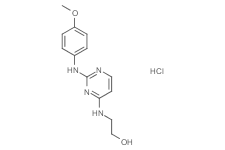
Cardiogenol C hydrochloride
CAS No. 671225-39-1
Cardiogenol C hydrochloride( —— )
Catalog No. M18976 CAS No. 671225-39-1
Cardiogenol C hydrochloride is a cardiomyogenesis inducer in embryonic stem cells.
Purity : >98% (HPLC)
 COA
Datasheet
HNMR
HPLC
MSDS
Handing Instructions
COA
Datasheet
HNMR
HPLC
MSDS
Handing Instructions
| Size | Price / USD | Stock | Quantity |
| 5MG | 74 | Get Quote |


|
| 10MG | 88 | Get Quote |
|
| 25MG | 118 | Get Quote |
|
| 50MG | 154 | Get Quote |
|
| 100MG | 220 | Get Quote |
|
| 200MG | Get Quote | Get Quote |
|
| 500MG | Get Quote | Get Quote |
|
| 1G | Get Quote | Get Quote |
|
Biological Information
-
Product NameCardiogenol C hydrochloride
-
NoteResearch use only, not for human use.
-
Brief DescriptionCardiogenol C hydrochloride is a cardiomyogenesis inducer in embryonic stem cells.
-
DescriptionCardiogenol C hydrochloride is a cardiomyogenesis inducer in embryonic stem cells.
-
In VitroCardiogenol C (1 μM; 7 days) has a cardiomyogenic effect on P19 cells, it significantly increases atrial natriuretic factor (ANF,?nppa) in P19 cells when it compares to untreated control cells.Cardiogenol C (0.01-100 μM; 7 days) significantly increases ANF expression. In addition, another frequently used cardiac marker gene (NKX2-5) is also significantly increased by this small molecule in C2C12 cells.Cardiogenol C (0.001-100 μM; 7 days) increases cardiac Nav1.5 sodium channel protein expression as dose-dependent manner in C2C12 cells.Cardiogenol C (0.01-100 μM; 7 days) does not effect cell growth even at 10 μM. In addition, Cardiogenol C either solves in water or DMSO generates a similar effect. The highest concentration, 100 μM has significant cellular toxicity on C2C12 cells. RT-PCRCell Line:C2C12 cells Concentration:0.01 μM; 0.1 μM; 1 μM; 3 μM; 10 μM; 30 μM; 100 μM Incubation Time:7 days Result:Increases ANF and NKX2.5 mRNA level as a dose-dependent manner. Western Blot Analysis Cell Line:C2C12 cells Concentration:0.001 μM; 0.01 μM; 0.1 μM; 1 μM; 10 μM Incubation Time:7 days Result:Increased cardiac Nav1.5 sodium channel protein levels.Cell Proliferation Assay Cell Line:C2C12 cells Concentration:0.01 μM; 0.1 μM; 1 μM Incubation Time:7 days Result:Did not exert toxic effects on C2C12 cells at 0.01-10 μM treatment.
-
In Vivo——
-
Synonyms——
-
PathwayGPCR/G Protein
-
TargetCannabinoid Receptor
-
RecptorOthers
-
Research Area——
-
Indication——
Chemical Information
-
CAS Number671225-39-1
-
Formula Weight296.75
-
Molecular FormulaC13H17ClN4O2
-
Purity>98% (HPLC)
-
Solubility——
-
SMILESCl.COC1=CC=C(NC2=NC=CC(NCCO)=N2)C=C1
-
Chemical Name——
Shipping & Storage Information
-
Storage(-20℃)
-
ShippingWith Ice Pack
-
Stability≥ 2 years
Reference
1. Mike AK, et al. Cell Physiol Biochem. 2014;33(1):205-21.
molnova catalog



related products
-
CB1R antagonist 1
CB1R antagonist 1 is a potent CB1R antagonist that can be used to study diseases related to the nervous system.
-
CB1 antagonist 2
CB1 antagonist 2 is caimabinoid 1 (CB1) antagonist extracted from patent WO2016184310A1, compound 3. Which inhibits CB1 in vivo with an IC50 of 25.5 nM.
-
Revosimeline
A novel potent cannabinoid receptor agonist.
